The Future of Senior Care Is Getting More Personal, More Connected, and More Human
by Strength of a Name LLC
Senior care is in the middle of one of the biggest shifts modern healthcare has ever seen.
For generations, growing older came with an unspoken script: once you needed more support, you moved into a facility — a nursing home, an assisted living community, somewhere built for care rather than for living. That script is being rewritten.
Older adults across the country are choosing a different path, one built around independence, dignity, and staying connected to the people and places that matter most. They want to stay in the homes where their lives happened — where their kids grew up, where holidays were hosted, where every room holds a memory.
This is aging in place, and it’s no longer a niche preference. It’s becoming the defining force in how we think about senior care.
Here at Strength of a Name, we see this shift as more than a demographic trend — it’s a reminder of something deeply human. People want to grow older in places where they feel known, respected, and valued. A home isn’t just four walls; it’s identity, independence, legacy, and story all in one place.
The question we should be asking isn’t “How do we move people into the systems we’ve built for aging?” It’s “how do we build systems around the way people actually want to age?” Increasingly, the answer is the same: bring the care, the technology, and the community *to* people, instead of asking people to leave home to find it.
A Demographic Shift Is Creating a New Care Economy
~The numbers back this up. The U.S. is in the middle of a historic demographic transition, with millions of Americans reaching retirement age and demand for senior services climbing fast.~
But this generation looks different from the ones before it. They’re more informed, more tech-comfortable, often more financially independent, and far more willing to say what they want out loud — and increasingly, what they’re saying is: *I don’t want to leave my home unless I absolutely have to.*
That single preference is reshaping healthcare, housing, transportation, insurance, and family life all at once. The businesses that recognize this early won’t just find a profitable niche — they’ll build something genuinely meaningful. The organizations that win will be the ones that understand a simple principle: senior care isn’t only about extending life. It’s about protecting the quality of that life.
Home Is Part of Someone’s Story, Not Just an Address
One of the easiest mistakes to make is treating aging as a purely medical problem — a list of diagnoses and services rather than a person with a history.
Every older adult has traditions, relationships, and small daily routines that bring comfort. The kitchen where family meals came together. The garden they planted years ago. The chair by the window where they read every evening. Leaving all of that behind can feel like losing a piece of yourself, even when the move is framed as “for your own good.”
Aging in place starts from the understanding that emotional well-being and physical well-being aren’t separate things — they’re connected. A person’s environment shapes their confidence and their sense of self. The goal isn’t just keeping someone alive longer. It’s helping them keep living fully.
The Opportunity: Building the Infrastructure of Independent Living
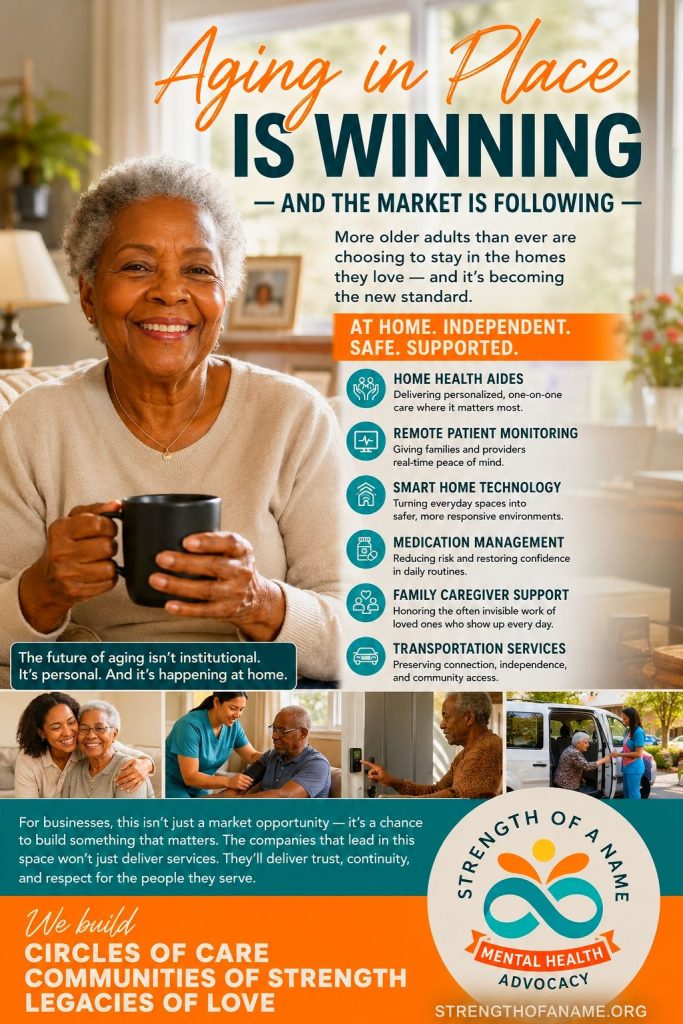
As aging in place grows, it’s creating an entire ecosystem — caregivers, technology providers, healthcare organizations, entrepreneurs, and community partners all building the infrastructure that makes independent living possible. The companies that succeed here won’t just sell services; they’ll build trust and become genuine partners to families, making some of the most important decisions of their lives.
A few areas stand out as especially ripe for growth:
Home health services.
Caregivers are the backbone of aging in place, and their role goes well beyond checking tasks off a list. They provide companionship, notice subtle changes in behavior, and often catch problems before they become emergencies. The caregivers who matter most going forward will bring strong training, compassion, clear communication, and real respect for the people they serve.
Remote patient monitoring.
Wearables and connected health tools give families and providers visibility into what’s happening between doctor visits. The real value isn’t the data itself — it’s the peace of mind. Families want reassurance their loved ones are safe; providers want better insight; older adults want independence without isolation. Done well, technology doesn’t replace human care — it strengthens it.
Smart home technology.
Fall detection, voice assistants, automated lighting, and emergency response systems are turning ordinary homes into safer ones. The best of these tools don’t demand attention — they fade into the background and just work.
Medication management.
As prescriptions pile up, staying organized becomes its own challenge. Tools that support reminders and tracking don’t take responsibility away from people — they help them hold onto it safely.
Family Caregivers Deserve More Recognition
Millions of family members are quietly doing the work of caregiving every day — coordinating appointments, managing medication, driving to visits, making hard calls, all while juggling their own careers and families. Most do it without much recognition, and it comes with real emotional, physical, and financial weight.
Any serious vision for aging in place has to include stronger support for the caregivers themselves. Supporting them strengthens the whole system. A healthy model doesn’t ask families to carry it all alone — it builds partnerships around them.
Transportation Keeps People Connected, Not Just Safe
Staying independent is about more than staying in a house — it’s about staying connected to community. Reliable transportation to medical appointments, religious services, social gatherings, and family visits matters just as much as physical safety.
Isolation is one of the biggest threats older adults face. Mobility creates opportunity, and connection creates purpose. Aging well takes more than safety — it takes belonging.
The Companies That Win Will Be the Ones Families Trust
This growing economy will create real opportunity, but success will take more than offering a service. Families aren’t just buying assistance — they’re placing trust in someone’s hands with their parents, spouses, and grandparents.
The organizations that lead in this space will be the ones built around relationships, transparency, consistency, respect, and long-term partnership. Treat senior care as just a market, and you’ll struggle. Treat it as a mission, and you’ll leave a lasting impact.
The Future of Aging Is Personal
The question isn’t whether aging in place will keep growing — it will. The real question is how communities, businesses, and families prepare for it.
The future of senior care won’t be defined by buildings. It’ll be defined by people, by compassion, and by innovation that serves humanity rather than replacing it — by systems built around a simple truth: every person deserves to age with dignity, every family deserves support, and every generation deserves to be valued.
Within Strength of a Name, we believe the future of aging isn’t about moving people away from the lives they love. It’s about building the resources and relationships that let them keep living those lives, with confidence, right where they are.
Home is more than a place. It’s where identity lives, where memories remain, and where legacy continues.
–Strength of a Name LLC
Leave a Reply